Green may fill a flag, form one stripe or appear only in a small emblem. These 54 examples compare its position alongside the other colors, from Morocco’s central star to Brazil’s broad green field.
The swatches shown below are approximate screen references, not certified national color specifications. Use the linked official references when accuracy matters, including emblem placement and current versions. This is a selection of flags containing green, not an exhaustive world list.
Use the palette visualizer to try your chosen colors in a layout. Check the current flag version before drawing.
India

#FE9933
#050088
#FFFFFF
#118809
India places saffron, white and green in three horizontal bands, with a navy-blue Ashoka Chakra in the center. The green runs along the bottom. These colors create a warm-to-cool progression across the flag, while the wheel adds a smaller dark detail.
For a palette inspired by the flag, compare saffron with red before selecting the warmer swatch. The National Portal of India describes the flag’s official colors and layout.
Brazil

#009B3B
#FDDF00
#FFFFFF
#002776
Brazil is a country in South America. Its flag places a yellow diamond on a green field, with a blue globe and white details inside the diamond. Green occupies the background rather than one band in a tricolor. A palette study can compare that large green area with the much smaller blue center.
Zimbabwe

#006300
#D30300
#FFD200
#000000
Seven horizontal bands run green, yellow, red, black, red, yellow and green. A white triangle at the hoist contains a red star and the Zimbabwe Bird. The repeated colors above and below the black center frame the dark center symmetrically.
South Africa

#FEB916
#E03A2D
#020C8A
#007847
The green Y-shaped band is the main dividing shape in South Africa’s flag. Its borders change depending on the neighboring color:
- White edges separate green from the red upper and blue lower areas.
- A yellow edge separates green from the black hoist triangle.
Madagascar

#FB3E33
#007E3A
#FFFFFF
Madagascar is an island country off southeastern Africa. Its flag has a white vertical band at the hoist, with red above green on the remaining field. The green occupies the lower-right area. That offset layout distinguishes it from an equal vertical tricolor.
Guinea-Bissau

#CE1326
#000000
#029E48
#FBD216
A red vertical band sits beside two horizontal areas: yellow above green. The black star belongs in the red band. Guinea-Bissau’s design brings the three larger colors together at one junction, while the star supplies a much smaller dark shape.
Iraq

#CD1125
#000000
#FFFFFF
#35905C
Iraq has red, white and black horizontal bands, with green Arabic lettering across the white center. Green appears in the inscription rather than a full stripe. At small sizes, the lettering needs enough space to remain legible. The current design should not be confused with earlier versions carrying green stars.
Guinea

Guinea is a country in West Africa. Its flag uses three vertical bands, red at the hoist, yellow in the middle and green at the fly. Compare it with Mali farther down this list: the same three colors appear in a different order.
Kuwait

Green forms the top horizontal band of Kuwait’s flag, above white and red. A black trapezoid occupies the hoist. The trapezoid’s sloping edge distinguishes the layout from a plain four-color stripe pattern.
Mauritania

Mauritania is in western Africa, and its capital is Nouakchott. Its flag centers a gold crescent and star on green, with red bands along the top and bottom. Green remains the largest area, but the two red bands are part of the current design.
Belarus

A broad red band sits above a narrower green band, with a red-and-white ornamental strip at the hoist. The pattern adds fine detail beside the two large areas. Belarus was formerly part of the Soviet Union; for a color study of the current flag, keep the ornament separate from the plain bands.
Benin

A vertical green band occupies the hoist side of Benin’s flag. Yellow and red divide the remaining area horizontally. Compare the layout with Madagascar: both combine a vertical band and a two-part field, but their color placement differs. For an independent design using a darker green, compare forest green with the red and yellow beside it.
Pakistan

Pakistan uses a dark green field with a white crescent and star. A white vertical stripe runs along the hoist. The green is a continuous background, so a palette based on the flag can use white for a few distinct shapes rather than alternating equal green and white bands.
Italy

Italy’s flag is a vertical tricolor: green at the hoist, white in the center and red at the fly. The plain bands make their order easy to compare with Mexico’s flag, which adds a coat of arms in the white area.
Senegal

Senegal places a green star in the yellow center of a green–yellow–red vertical tricolor. Green therefore appears both as a full band and as a small emblem. In a reduced graphic, retain the star rather than treating the design as three plain stripes.
The Movement of Democratic Forces of Casamance is associated with Senegal’s Casamance separatist conflict.
Hungary

Hungary uses red, white and green horizontal bands, with green along the bottom. There is no emblem on the plain national tricolor. The Hungarian language is used in the country’s schools and administration.
Guyana

Guyana’s green field is crossed by a long yellow triangle edged in white, with a shorter red triangle edged in black at the hoist. The nested points create the arrow-like structure. In a small reference image, the black and white borders keep the nested triangles separate. A golden yellow swatch offers a starting point for a flag-inspired palette.
Morocco

A green five-pointed linear star sits in the center of Morocco’s red flag. Green takes up very little of the surface, yet its position makes it the focal detail. Compare that compact symbol with the larger blue cross on Finland’s white flag to see how much the background changes a small color palette.
Mexico
Mexico has green, white and red vertical bands, with its national coat of arms in the white center. The emblem distinguishes it from Italy’s plain tricolor. The three bands can supply a background palette, while the emblem carries finer detail in a full flag illustration.
Nigeria

Two green vertical bands surround an equal-width white center on Nigeria’s national flag. The plain national design has no star, triangle or coat of arms. Its simple arrangement is useful when comparing how a light middle band separates two matching green areas.
Bulgaria

White, green and red form Bulgaria’s horizontal tricolor. Green occupies the middle band, unlike Hungary’s bottom green stripe. Bulgaria also has sites on the UNESCO World Heritage list, including cultural and natural places.
Lithuania

Lithuania’s flag runs yellow, green and red from top to bottom. Its center green band separates two warm colors. Placing a small set of swatches beside Bulgaria’s white–green–red arrangement shows how changing just the top band affects the overall palette.
Syria
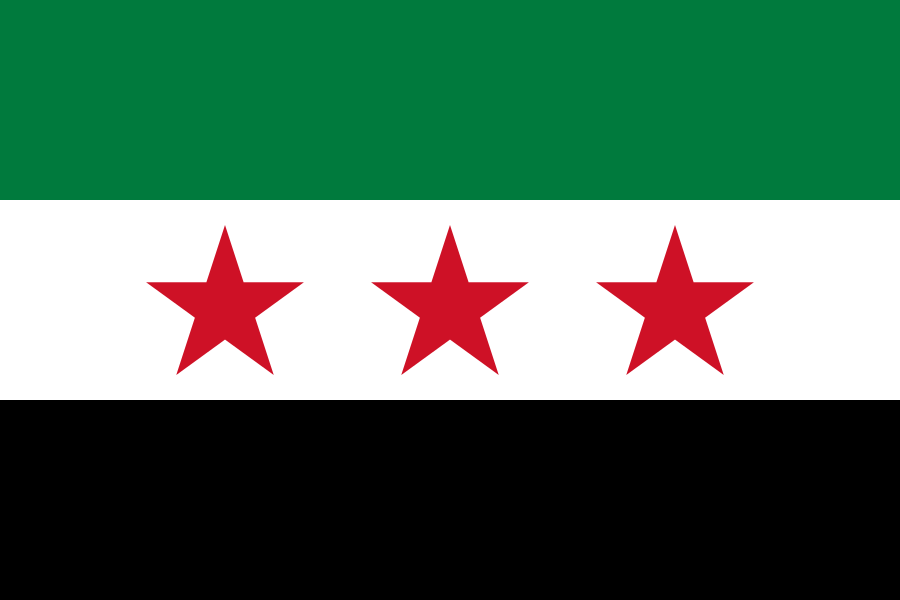
The current Syrian flag has green, white and black horizontal bands, with three red stars across the white center. The United Nations raised the three-starred design in April 2025. Its broad green top band changes the balance of the palette compared with the earlier red-topped design.
Dominica
Green surrounds a cross made from yellow, black and white stripes. A red central disk contains the parrot and green stars. Dominica combines a large green background with much finer details, so a four-swatch summary cannot describe every color in the emblem.
Kenya

Kenya’s flag has black, red and green horizontal areas separated by narrow white stripes. A shield and crossed spears occupy the center. Green forms the lower band, beneath the shield’s pointed lower edge.
Saudi Arabia

Saudi Arabia’s flag places a white Arabic inscription and a white sword on a green field. The two white elements have different shapes and spacing. The inscription occupies the upper part of the composition, with the sword set below it.
Burundi

A white diagonal cross divides Burundi’s flag into red upper and lower areas and green side areas. The central white disk carries three red stars edged in green. The two green side areas point inward toward the central disk.
Sri Lanka
A narrow green vertical band appears beside an orange band near the hoist. The larger maroon field contains a gold lion and gold corner details, all within a gold border. Green is only one part of this palette; the broad maroon-and-gold area should remain visible in a color summary.
Comoros

A green hoist triangle contains a white crescent and four stars. Beside it, the horizontal bands run from top to bottom:
- Yellow
- White
- Red
- Blue
Rwanda

A broad blue upper band sits over yellow and green, with a yellow sun toward the upper fly. The green belongs along the bottom. Blue covers more of the flag than either yellow or green. Equal-size swatches show the hues but lose that difference in area.
Namibia

Namibia has an Atlantic coastline, and its capital is Windhoek. Its flag places blue above a red diagonal stripe and green below, with white borders around the stripe. A yellow sun appears in the blue area. The green and blue form broad opposing fields.
Mali

Green, yellow and red appear in vertical bands on Mali’s flag. Green is at the hoist. Compare it with Guinea’s red–yellow–green arrangement: the palette is similar, but reversing the outer bands produces a different national flag.
Tanzania

A black diagonal band edged in yellow rises from the lower hoist to the upper fly. Green fills the upper-hoist triangle, and blue fills the lower-fly triangle. The yellow edges keep the dark band distinct from both large color areas.
Jamaica

A gold diagonal cross separates green upper and lower triangles from black side triangles. Green and black do not share an edge because the gold cross lies between them. The gold cross connects opposite corners, leaving four distinct triangular areas.
Uzbekistan

Blue, white and green horizontal bands are separated by narrow red lines. A white crescent and twelve stars sit near the hoist in the blue band. Uzbekistan borders Kyrgyzstan, among other countries; its own flag’s green stripe occupies the bottom.
Libya

Libya’s flag has red, black and green horizontal bands, with a wider black center carrying a white crescent and star. Green is the lower band. The all-green flag belongs to an earlier period and should not be used as the current national design.
Cameroon

A yellow star sits in the red center of Cameroon’s green–red–yellow vertical tricolor. Green runs along the hoist. The star makes a small yellow shape within red, in addition to the full yellow band at the fly.
Bangladesh

Bangladesh places a red disk on a dark green field. The disk sits slightly toward the hoist rather than at the exact horizontal center. A two-color palette captures the main colors, but the disk’s position is part of the flag’s design.
Sudan

Sudan has red, white and black horizontal bands and a green triangle at the hoist. The triangle brings green into contact with all three stripes. The Red Sea lies along Sudan’s eastern coast.
Sierra Leone

Sierra Leone’s flag has three horizontal bands: green on top, white in the middle and blue below. White separates the green and blue across the full width.
Portugal
Portugal’s flag combines a smaller green hoist area with a larger red field. The national arms and armillary sphere sit across the boundary. The green and red areas are unequal, so an even split would change the composition.
United Arab Emirates

A red vertical band marks the hoist of the UAE flag. To its right are green, white and black horizontal bands. Green occupies the upper-right area, with red framing the stripe arrangement on the left.
South Sudan

South Sudan places a blue triangle with a yellow star beside black, red and green horizontal bands. Thin white stripes separate the three bands. Its blue triangle distinguishes the design from Sudan’s green-triangle flag.
Djibouti

Blue sits above green on Djibouti’s flag, beside a white hoist triangle with a red star. The triangle covers parts of both bands. The small red star stays within the white triangle.
Maldives

A red border surrounds a green rectangle containing a white crescent. The green forms a central panel. Its inset position creates a different balance from the full green fields on Pakistan’s and Saudi Arabia’s flags.
Bolivia

Bolivia uses red, yellow and green horizontal bands. The plain civil flag carries those three colors; the state version adds a coat of arms in the center. Both versions share the same stripe sequence.
Ghana

Ghana places a black star in the yellow center of a red–yellow–green horizontal tricolor. Green forms the lower band. The star adds a dark focal point without dividing the three broad color areas.
Gambia

The Gambia has red, blue and green horizontal areas, with narrow white stripes above and below the blue. Green belongs along the bottom. The thin white separators are easy to lose in a small drawing, but they keep the blue from touching red or green directly.
Gabon

Gabon borders the Gulf of Guinea on Africa’s Atlantic side. Its flag is a horizontal tricolor of green, yellow and blue. Green occupies the top band. Compare it with Rwanda’s blue–yellow–green arrangement, noting both the order and the relative band sizes.
Mozambique
Mozambique uses green, black and yellow horizontal bands with narrow white separators. A red hoist triangle contains a yellow star and a detailed emblem. Green forms the upper band, while the emblem introduces shapes that a simple palette strip will not show.
Algeria

Algeria divides its flag vertically into green at the hoist and white at the fly. A red crescent and star cross the center. The small red shapes sit across the boundary between the two large fields.
Malawi

Black, red and green run horizontally down Malawi’s flag. A red rising sun appears in the upper black band. The plain green lower band contrasts with the detailed sun above.
Oman
White, red and green horizontal bands meet a red vertical hoist band on Oman’s flag. A white national emblem, formed from a khanjar and crossed swords, appears near the top of that band. Green occupies the lower-right area.
Seychelles


Blue, yellow, red, white and green bands fan outward from the lower-hoist corner of Seychelles’ flag. Green is the lowest band toward the fly. Their widening shapes make this a different color study from an equal-width tricolor.
Seychelles is an Indian Ocean island country and a member of the Commonwealth of Nations.
Related Articles: Blue and red flag, Red and White Flag
Design references include India’s National Portal, the South African Government, Oman’s official flag description and Sierra Leone’s constitutional flag description. The United Nations announcement documents Syria’s three-starred flag at the UN in 2025.