Before adapting an example, check visible labels, keyboard focus, error messages and the contrast of its text and controls. Authentication, payment processing and response storage need their own implementation.
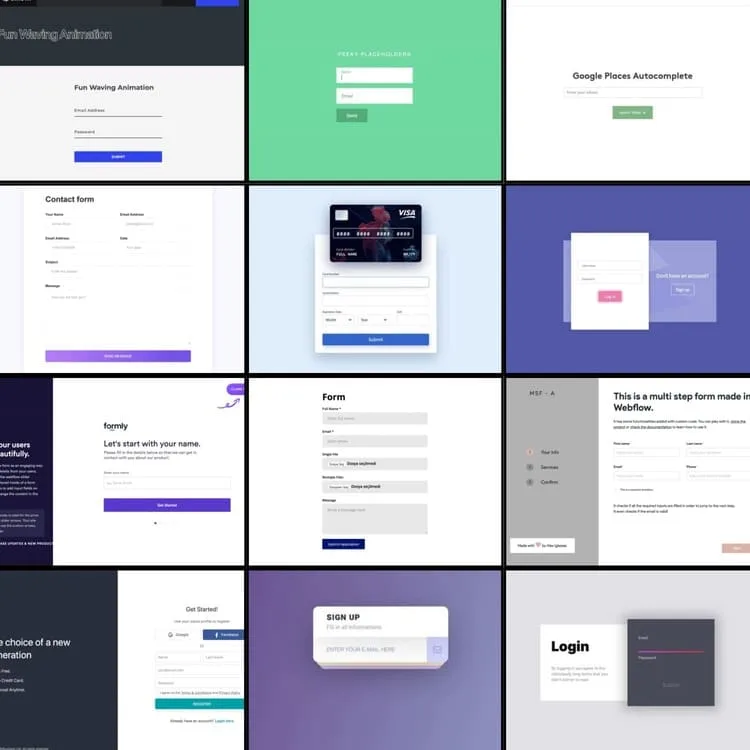
1 - Full Page Onboarding Form
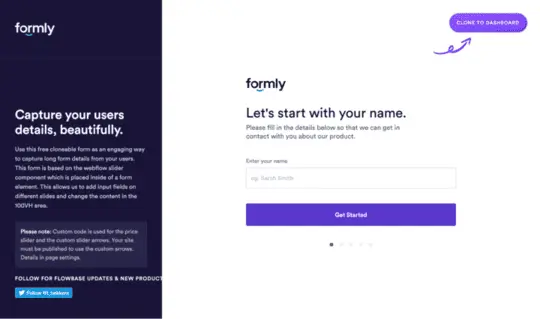
A full-page form gives the questions the whole screen. It can suit a focused onboarding task, but visitors still need a clear way back. Keep the current step and the next action visible without scrolling.
2 - Cool Animated Login Page
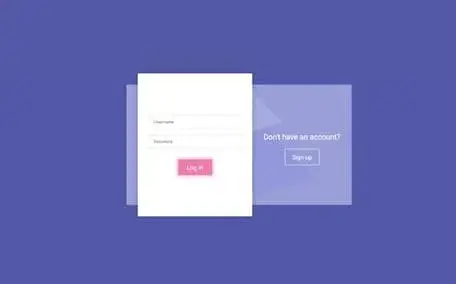
The sliding transition is the main attraction here. It gives the login panel movement while the fields remain the familiar email-and-password pair. A little theatre is fine. The password field still has a job to do.
A static version can offer the same fields without the sliding effect for people who prefer less motion.
3 - Form With Cool Placeholders

The label moves as the field becomes active. That leaves more room inside the input, provided the label remains readable after typing. A placeholder should not be the only label. The field still needs an associated label that identifies what to enter.
4 - Fun Waving Animation

Here, the text lifts in a wave when the field receives focus. The effect could fit a playful brand. A brief wave leaves the letters easier to follow than a long sequence of movement.
5 - Google Places Autocomplete Form

Address suggestions narrow the choices as someone types. Leave a manual-entry route for addresses that the service does not return. Google Places also needs billing and authentication setup before it can supply suggestions.
6 - Single and Multiple Files Uploader

File uploads need clear status messages as well as a styled button. Tell people what they can upload before they choose a file.
- Show accepted file types and the size limit.
- Separate uploading, success and error states.
- Explain how a visitor can replace an attachment.
A native Webflow upload button accepts one file up to 10 MB. Custom uploaders can have different limits.
7 - Multi-Step Form Example with Input Validation

Breaking a longer form into steps can keep related questions together. Contact details can form one stage, with a different task in the next. A short form may need only one page.
8 - Two Column Login Page

A two-column layout leaves space for branding beside the login fields. On a narrow screen, that decorative panel may need to move below the form or disappear.
When comparing branded pages such as Mailchimp and Slack, look at what gets priority: the fields, recovery link and main action. Supporting artwork belongs around that task.
| What you need | Examples to compare | Main detail |
|---|---|---|
| Login layout | 2, 8, 14, 16 | Field priority and responsive space |
| Longer registration | 7, 12, 17, 19–22 | Progress and returning to answers |
| Attachments | 6 | Upload limits and status messages |
| Card-entry styling | 11, 13 | Readable fields and separate payment handling |
9 - Contact Form With Gradient Button

The gradient button provides the accent in this contact-form layout. Quieter field labels give the action room to stand out. You can adjust the transition in the gradient maker. Check the button text against the colors beneath it, including the middle of the transition.
10 - Snake Highlight Border Login Form

The bright border line travels to the active field. Most of the visual change happens at the edge, leaving the area used for typing still.
11 - Clean Credit Card Form Example

This card-entry demo uses Vue.js to update a card illustration beside the fields. The illustration mirrors the details as they are entered, giving payment forms a more tangible card layout.
Use sample details in public demos.
12 - Interactive Step By Step Sign Up Form

One question takes the foreground at a time. The transition between questions matters less than being able to correct an earlier answer without starting again.
Try the sequence with the keyboard. A moving panel should not leave focus on a field that is no longer visible.
13 - Dynamic Credit Card Form Style

The illustration gives credit cards a familiar shape on screen. Keep the field names and input order understandable without that illustration. Visitors should not have to read tiny numbers on a decorative card to finish the form.
14 - Well Styled Login Screen

A dark login panel changes the balance between the background, field borders and text. Watch the subdued labels: a gray that looks elegant at full size may become hard to read on a smaller screen.
15 - Google and Facebook Sign Up

The Google and Facebook options sit alongside the regular sign-in route. Clear labels distinguish these choices from the email fields. Connecting a provider also means deciding what account information the application needs.
16 - Divided Screen Login Page

Florin Pop’s double-slider demo switches between sign-in and sign-up panels. The creator labels it desktop only, so a phone layout needs separate work. The broad colored panel can carry the branding while the form area stays plain.
17 - 3 Step Lead Form Example

Three visible stages make the length of this lead form easier to judge. A progress label such as Step 1 of 3 gives that position a meaning beyond the color of the line.
18 - Night Shift Form with SVG Radio Buttons
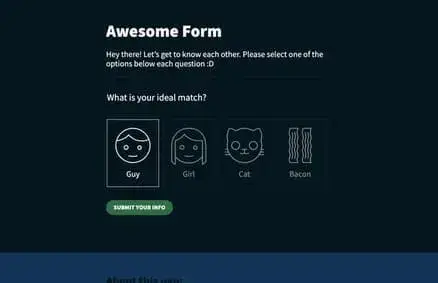
The Night Shift example uses SVG artwork with radio-button choices. Radio buttons select one option within a group. Its illustrated choices give a standard control a more distinctive look, while the option text explains what each choice means.
19 - Cross Slider Step by Step Form

A vertical sliding sequence moves from one question to the next. The styles control its appearance, while Javascript handles the interaction between steps.
20 - Step by Step 3D form animation

The 3D transition adds depth to a step-by-step form. Keep the progress text in a steady position while the panels move.
A hosted service such as Jotform is a separate route for collecting responses. Choose between a custom interaction and a hosted form by what you need to build and maintain, rather than by the animation alone.
21 - Timeline Style Form Experience

The timeline puts completed answers in the context of the whole sequence. Written step labels can distinguish the current position from the answers already given, even without the accent color.
22 - Input Form with a Progress Bar

The progress bar puts the current position above the questions. Keep that indicator close to the active field so it does not feel detached from the task. A plain background also gives errors and help text a clear place to appear.
23 - Twitter Login Screen Clone
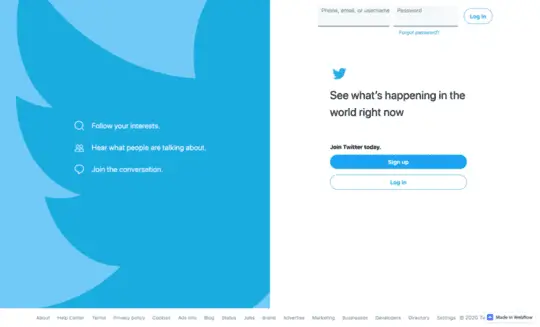
This is a recreation of a historical Twitter login screen, not a reference for X’s current interface. The large branded area and smaller form area make it useful for studying scale and color placement. Treat the logo and other brand assets separately from the layout idea.
Cover image: Alex Green