Orange Crayola has the clear, waxy punch of a fresh crayon mark, landing between bright orange and a red-orange peel.
| Color model | Value | Common use |
|---|---|---|
| HEX | #FF7538 | Web and interface color |
| RGB | rgb(255, 117, 56) | Digital screens |
| HSL | hsl(18, 100%, 61%) | Hue-based adjustments |
| HSV | hsv(18, 78%, 100%) | Color pickers |
| CMYK | 0%, 54%, 78%, 0% | Print reference |
#ff7538
#000080
#f4e7d0
#241b19
#ff7538
#008080
#9ed1c7
#173a38
#ff7538
#ffd700
#2d5da8
#fff8e8
#ff7538
#36454f
#c9b7a8
#f8efe8
A dense crayon stroke is a useful material reference for Orange Crayola: the surface feels waxy, direct, and warmer than ordinary screen orange.
Rusty Orange turns the wax-bright mark into a useful two-step hierarchy. Robin Egg Blue adds a playful cool accent for classroom graphics or illustrated mailers.
Orange Crayola is strongest when it behaves like a hand-made mark: underline, arrow, stamp, or rough-edged shape. Polished full-screen fills lose some of that familiar waxy character.
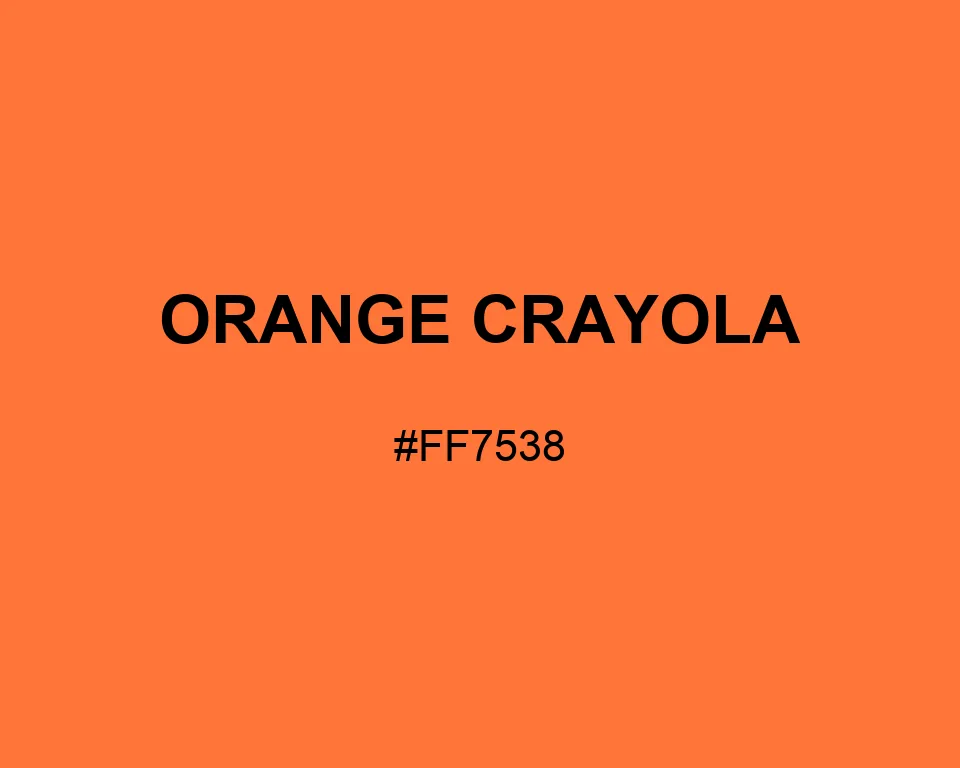
#ff7538
#ff834c
#ff9160
#ff9e74
#ffac88
#ffba9c
#ffc8af
#ffd6c3
#ffe3d7
#fff1eb
#ffffff
#ff7538
#e66932
#cc5e2d
#b25227
#994622
#803a1c
#662f16
#4c2311
#33170b
#1a0c06
#ff7538
#ffffff
#ffffff
#a64c24
#d1602e
#ff7538
#ff8e5c
#ffa57e
#ffffff
#ff7538
#ffffff
#ff7538
#ffffff