5 Living Room Color Palettes for a Statement Sofa
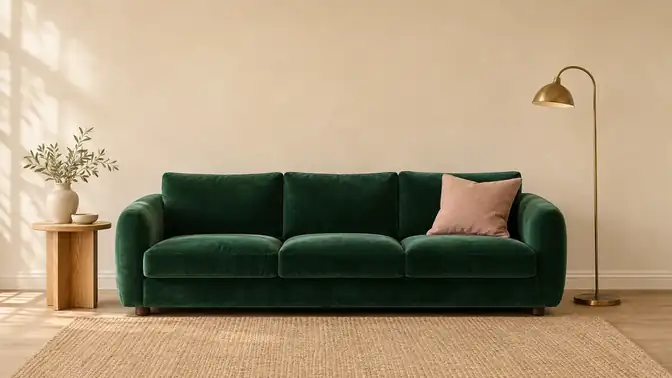
Pair an emerald sofa with cream walls, a jute rug, and a blush cushion. For a rust sofa, try sand-colored walls and a little olive. Start with the upholstery, then choose wall and rug colors that give it room to stand out.
Start with the 60-30-10 rule
Use the 60–30–10 rule to decide which colors cover the largest surfaces.
- 60% a dominant color, usually the walls and large surfaces
- 30% a secondary color, often the sofa, rug or curtains
- 10% an accent color, used in cushions, art and small objects
Treat the percentages as a rough guide. The walls and rug usually cover the most area, the sofa supplies the secondary color, and a few cushions or objects carry the accent.
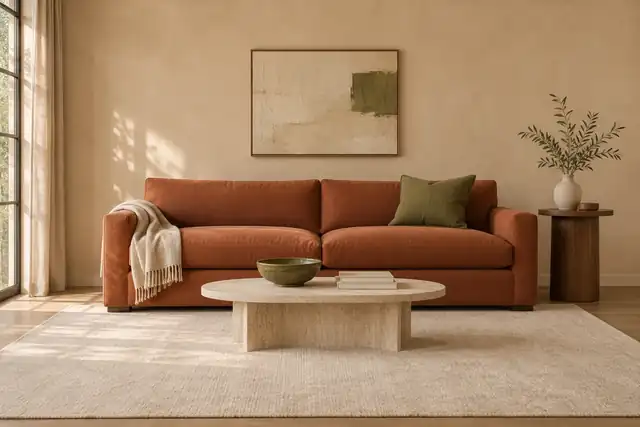
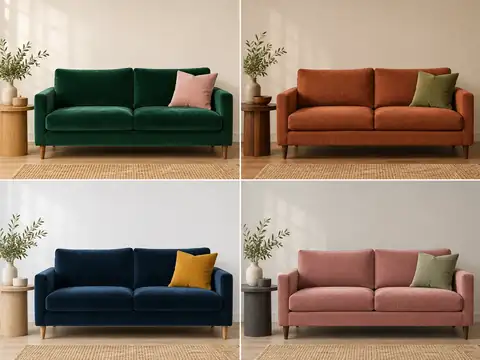
Wall colors and accents for five sofa colors
Emerald or forest green
Green sofas are one of the easiest statement pieces to live with, because green behaves almost like a neutral.
- Walls: warm white, soft cream or pale greige
- Secondary: natural wood, cane and jute
- Accents: blush pink, mustard or brass
If you’re still choosing upholstery, compare shades of green from emerald to forest.
Rust, terracotta or burnt orange
Warm, earthy sofas suit relaxed, sunny rooms and pair well with natural materials.
- Walls: off-white, sand or a light clay
- Secondary: walnut, leather and warm brown
- Accents: olive, deep teal or cream
For a lighter backdrop, look for sand and beige in these light brown color palettes.
Navy or deep blue
Navy brings depth and works in both classic and modern rooms.
- Walls: crisp white, pale gray or very light blue
- Secondary: oak, light linen and white oak floors
- Accents: ochre, coral or brass
Blush or dusty pink
A pink sofa can feel grown-up when the rest of the room is calm.
- Walls: warm white or soft gray
- Secondary: charcoal, deep green or black metal
- Accents: terracotta, gold or sage
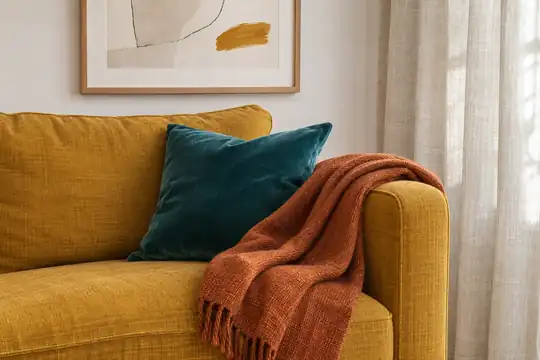
Mustard or ochre
Yellow sofas bring instant warmth and energy.
- Walls: soft white or pale sage
- Secondary: gray, navy or dark wood
- Accents: teal, rust or black
How to test a palette before you paint
Colors shift dramatically between a screen, a showroom and your actual room. Before committing:
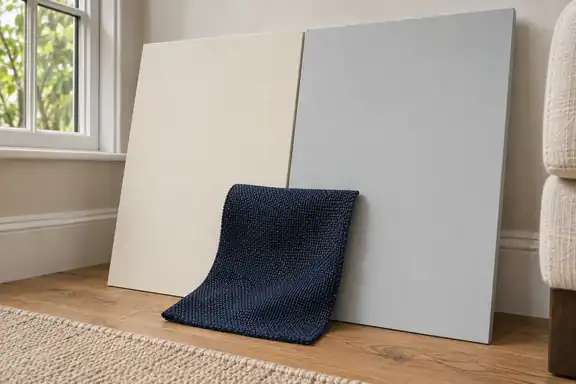
- Get a fabric swatch of the sofa. Most brands send swatches, and some send them free.
- Paint large test patches. Small squares are misleading. Paint at least two feet square, or use sample sheets.
- Check at different times. Look in morning light, afternoon light and under your evening lamps.
- Put everything together. Hold the swatch against each paint sample and next to your floor and rug.
If you prefer a gentler look, soft color palettes are a good reference for muted wall colors that won’t fight a bold sofa.
Don’t forget the neutrals
Every palette needs places for the eye to rest. Neutrals do that job:
- Wood tones add warmth and work with almost every sofa color.
- Black accents, such as picture frames or lamp bases, sharpen a room.
- Textured whites in linen, bouclé or ceramics keep a pale room from feeling flat.
Match the sofa to the room’s light
Light changes how a sofa’s color reads:
- North-facing rooms get cooler light. Warm sofas such as rust and mustard help balance it.
- South-facing rooms get warm light. Cool sofas such as navy and green feel fresh here.
- Small rooms can still take a bold sofa, as long as the walls stay light and the accents are limited.
When the sofa comes first
If you’re choosing the sofa and the palette at the same time, start with the fabric. It’s much easier to match paint to a fabric than the other way round, because there are thousands of paint colors and far fewer upholstery options. If you’re shopping at Dream Sofa, order swatches in a few colors and compare them against your walls and flooring in daylight and under your evening lamps.
Bring the palette into textiles and art
Paint is only part of a palette. Cushions, throws, curtains and art are where most of your accent color lives, and they’re far cheaper to change than walls or a sofa.
- Cushions: choose two or three colors from your palette and vary the textures, such as velvet, linen and a woven pattern.
- Curtains: keep them close to the wall color for a calm look, or pick up the sofa’s tone for a richer, more enclosed feel.
- Art: look for pieces that include a little of the sofa color. It ties the room together without being too literal.
- Plants: greenery works with almost every palette and softens strong colors.
Because these pieces are easy to swap, you can shift the palette with the seasons, warmer in winter and lighter in summer, while the sofa and walls stay the same.
Common mistakes to avoid
- Too many strong colors. Let the sofa be the star and keep other bold colors to small accents.
- Ignoring undertones. A cool gray wall can make a warm rust sofa look muddy. Check whether your neutrals lean warm or cool.
- Matching everything. A room where every cushion matches the sofa can feel flat. Repeat a color two or three times, then add one contrast.
- Forgetting the floor. Your floor and rug are large areas of color too, so include them in your palette.