Similar colors do not always mean the same thing. This list includes a national flag, a Pan-African symbol and a historical Karelian design.
Pan-African

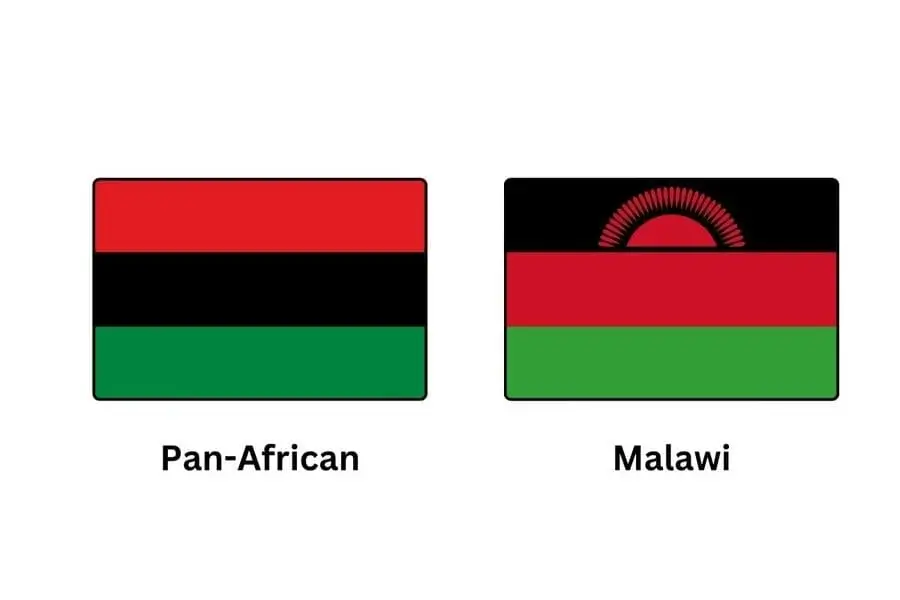
This flag uses red, black and green as horizontal stripes, from top to bottom. It is also known as the African American flag.
It was created in 1920 as a symbol connecting people of African descent, rather than representing one country. Marcus Garvey is associated with its design; the US General Services Administration describes its unifying role.
Bonus: Flag coloring pages
Malawi

Malawi is a landlocked country in southeastern Africa. Its official name is the Republic of Malawi.
Its flag has black, red and green horizontal bands, with a red rising sun in the black band. The Malawian embassy explains the sun as hope and freedom for the African continent.
Karelia (1920 design)

This is a historical Karelian flag, not the national flag of an independent country today. Akseli Gallen-Kallela designed it in 1920 for the Karelian independence movement.
The green field carries a black Nordic cross edged in red. The cross is shifted toward the flagpole. A historical account of the Karelian flag describes its development and use during the 1921–1922 uprising.
Color Meanings
The meanings attributed to these colors are not universal. For the Pan-African flag, the Smithsonian’s museum account explains them this way:
- Red: the blood of Black people.
- Black: Black identity and skin color.
- Green: the lands of Africa.
Malawi’s interpretation also connects black with African people, red with the independence struggle and green with vegetation. Its rising sun adds a separate symbol of hope and freedom.
| Name | Short Description |
|---|---|
| Pan-African (African American flag) | Community symbol; red–black–green horizontal bands |
| Malawi | National flag; black–red–green bands with a red rising sun |
| Karelia (1920 design) | Historical design; green field, black Nordic cross edged in red |
Related Flags: Blue and White Flag, Blue and Yellow Flag, Red Yellow, Green Flag