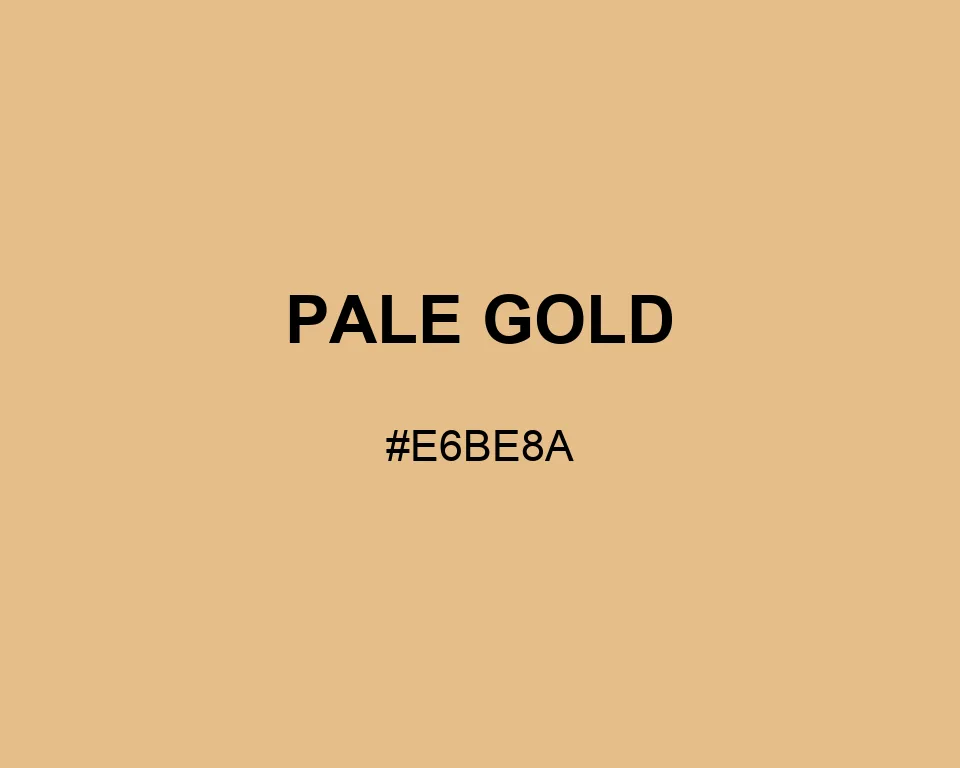
Pale Gold
Metallic shine would be too loud for #E6BE8A. Pale Gold works because it behaves like a soft material—silk, paper or plaster under warm light.
Color Conversions
| Color model | Value | Common use |
|---|---|---|
| HEX | #E6BE8A | Web and interface color |
| RGB | rgb(230, 190, 138) | Digital screens |
| HSL | hsl(34, 65%, 72%) | Hue-based adjustments |
| HSV | hsv(34, 40%, 90%) | Color pickers |
| CMYK | 0%, 17%, 40%, 10% | Print reference |
Real Design Examples 👇🏽
Color Combinations
Jordy Blue Silk
#e6be8a
#8ab2e6
#c4d3e5
#4f6c8f
Fig Brown Keepsake
#e6be8a
#64433e
#a47b70
#382824
Porcelain Dressing Table
#e6be8a
#f6f1e8
#b7ab99
#514a42
Sage Linen Ribbon
#e6be8a
#879579
#bac1a8
#4c5844
Palettes
Other Color Collections
Fashion
Interior
Wallpapers
Patterns
Best Match
Pale Gold carries the idea of metal without trying to imitate shine. On a flat screen it behaves more like silk, warm plaster, or a softly lit champagne-colored paper.
In CSS terms, #E6BE8A becomes rgb(230 190 138). The gradual 40/52-point drops explain why the pale finish leans peach instead of clear yellow.
Jordy blue introduces an airy counterpoint. Fig brown makes the gold feel older, while porcelain keeps a tonal composition almost weightless. These sets suit stationery, interiors, and quiet product photography.