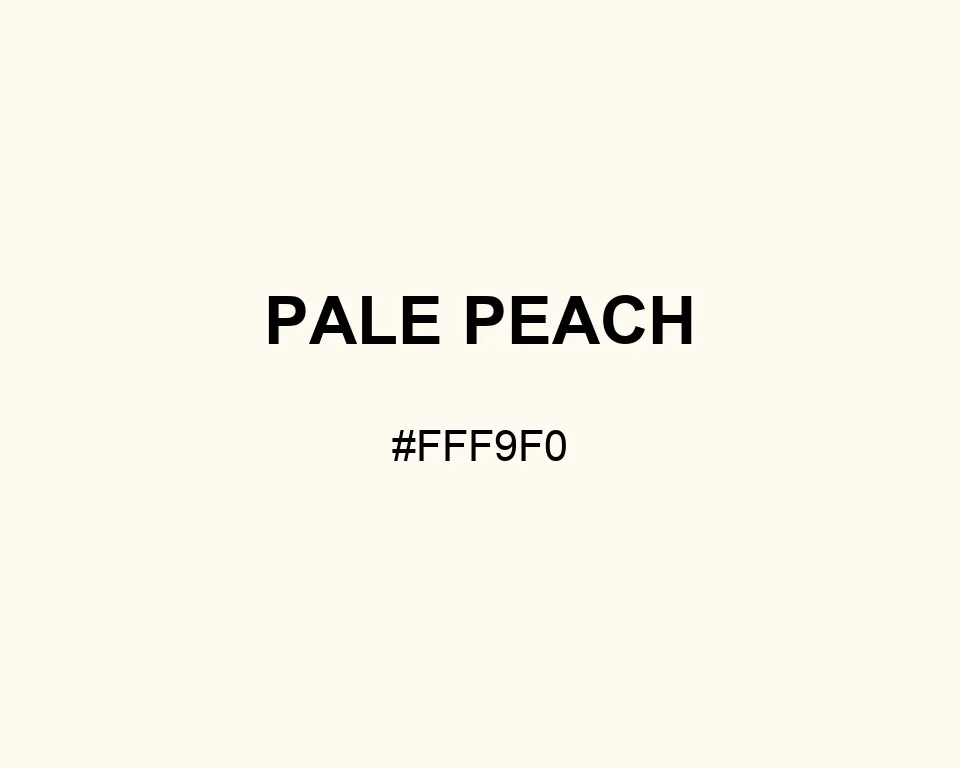
At first glance, Pale Peach may pass for white. A direct comparison with printer stock reveals its soft orange cast.
| Color model | Value | Common use |
|---|---|---|
| HEX | #FFF9F0 | Web and interface color |
| RGB | rgb(255, 249, 240) | Digital screens |
| HSL | hsl(36, 100%, 97%) | Hue-based adjustments |
| HSV | hsv(36, 6%, 100%) | Color pickers |
| CMYK | 0%, 2%, 6%, 0% | Print reference |
#fff9f0
#d8b69a
#8e6e59
#46372f
#fff9f0
#36454f
#9aa4a8
#ffffff
#fff9f0
#3eb489
#a9dac7
#245a48
#fff9f0
#dca1a1
#8e5f66
#4a3337
The RGB reading for #FFF9F0 is 255, 249, and 240. Only fifteen levels separate the top and bottom channels. That narrow spacing explains its near-white appearance.
For long reading areas, charcoal gray keeps letters crisp. A thin terracotta marker reveals the background warmth. Cool gray can separate adjacent cards without adding another hue.
The color resembles uncoated stock held near a peach-toned wall: the cast is faint, yet the surface feels less clinical than pure white.
#fff9f0
#fffaf2
#fffaf3
#fffbf4
#fffbf6
#fffcf8
#fffdf9
#fffdfa
#fffefc
#fffefe
#ffffff
#fff9f0
#e6e0d8
#ccc7c0
#b2aea8
#999590
#807c78
#666460
#4c4b48
#333230
#1a1918
#fff9f0
#ffffff
#ffffff
#a6a29c
#d1ccc5
#fff9f0
#fffaf3
#fffbf5
#ffffff
#fff9f0
#ffffff
#fff9f0
#ffffff