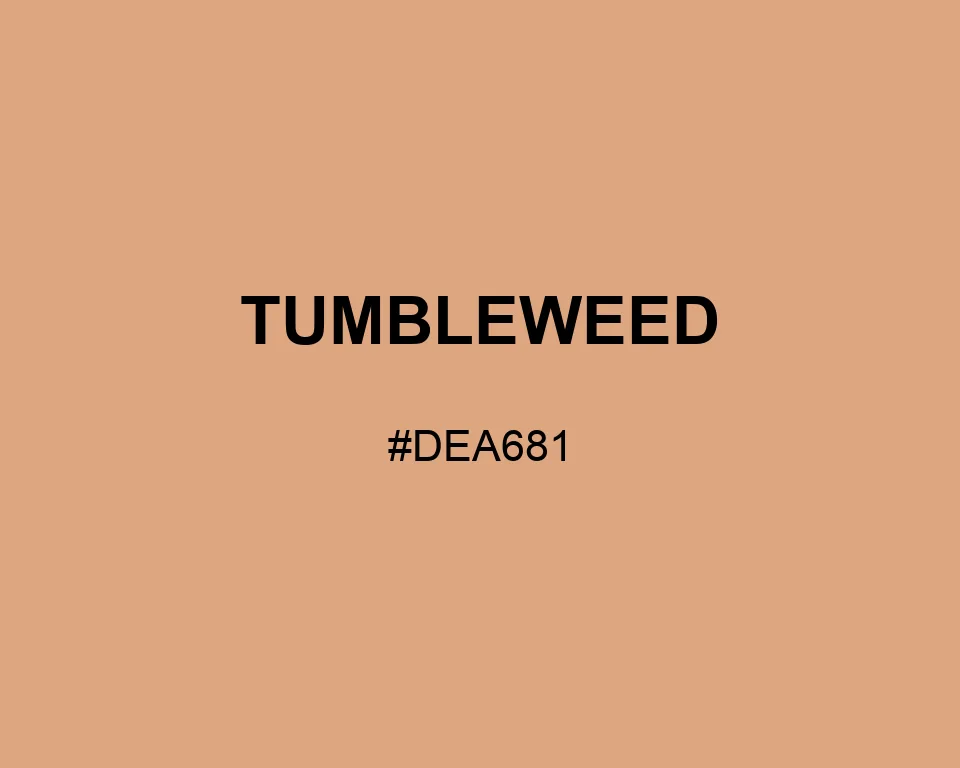
Muted orange and dry tan meet in #DEA681. Tumbleweed has enough color for an accent band, yet it settles easily beside aged natural materials.
| Color model | Value | Common use |
|---|---|---|
| HEX | #DEA681 | Web and interface color |
| RGB | rgb(222, 166, 129) | Digital screens |
| HSL | hsl(24, 58%, 69%) | Hue-based adjustments |
| HSV | hsv(24, 42%, 87%) | Color pickers |
| CMYK | 0%, 25%, 42%, 13% | Print reference |
#dea681
#34406e
#8993b4
#f2e9dc
#dea681
#676b45
#aeb28a
#35392d
#dea681
#e3dac9
#8b5d4b
#44372f
#dea681
#487a78
#9db8b1
#294443
The name suits the surface. Tumbleweed resembles sun-dried stems, worn leather, and clay dust rather than polished orange. It gives field-note layouts and textile boards a weathered base.
Indigo blue gives the tan-orange a firm edge; Olive green keeps it outdoors, while bone white opens more space around it.
Tumbleweed never reaches full red: #DEA681 stops at 222, then moves through 166 green and 129 blue. Those restrained RGB ceilings account for the dusty, sun-dried finish.

#dea681
#e1af8e
#e5b89a
#e8c1a7
#ebcab3
#eed2c0
#f2dbcd
#f5e4d9
#f8ede6
#fcf6f2
#ffffff
#dea681
#c89574
#b28567
#9b745a
#85644d
#6f5340
#594234
#433227
#2c211a
#16110d
#dea681
#4cde86
#864cde
#906c54
#b6886a
#dea681
#e4b698
#eac5ad
#de4c5b
#dea681
#decf4c
#dea681
#4ca4de