Tints
#292929
#3e3e3e
#535353
#696969
#7e7e7e
#949494
#a9a9a9
#bebebe
#d4d4d4
#e9e9e9
#ffffff
Shades
#292929
#242424
#202020
#1c1c1c
#181818
#141414
#101010
#0c0c0c
#080808
#040404
#000000
Monochromatic
#020202
#0f0f0f
#1c1c1c
#292929
#353535
#424242
#4f4f4f
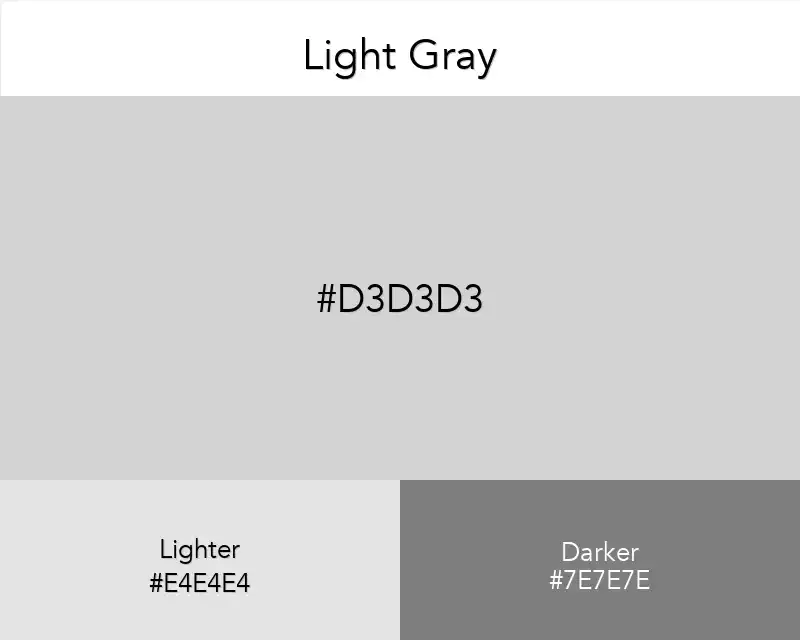
Light grey, HEX code #D3D3D3, is both elegant and versatile. It offers a modern and refreshing look while adding a simplistic elegance to designs.
Why Use Light Gray in Design?
Light gray creates a clean and professional mood in interface designs. It emphasizes dark elements and provides a calm and distraction-free abstract background. It's an ideal UI/UX design choice and pairs beautifully with strong contrasts such as black or red.
Cultural Significance of Light Gray
Frequently used in architecture and fashion in the Middle Ages, light gray was a symbol of practicality and elegance at the time. Today, it still offers a timeless elegance in designs.