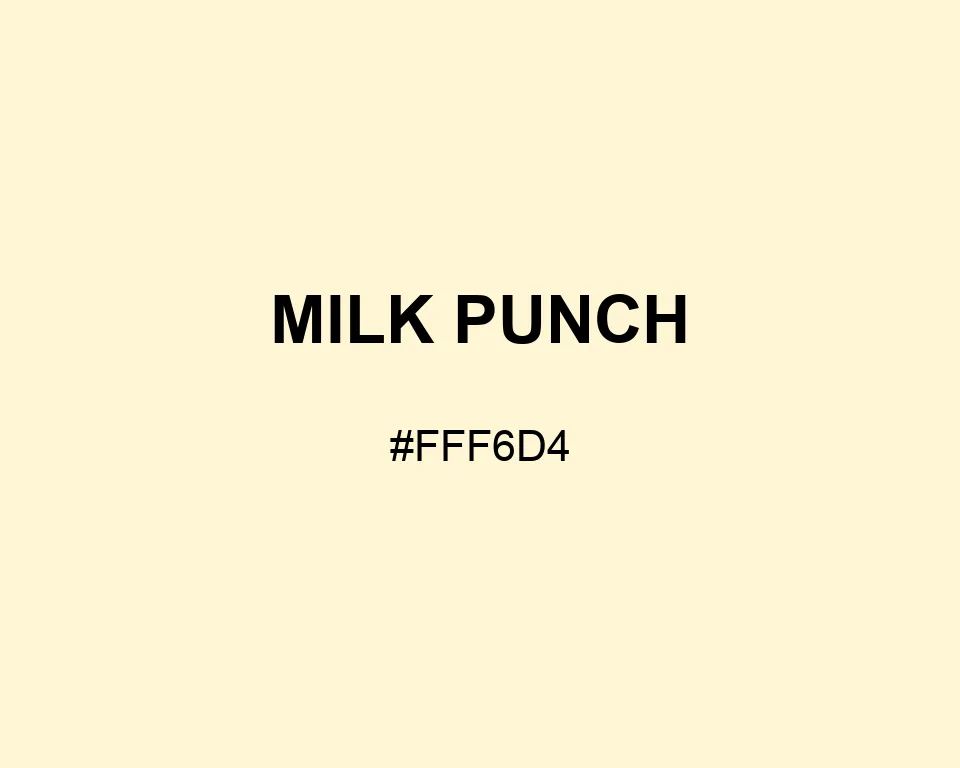
Milk Punch has the pale yellow cast of cream stirred into a chilled drink, stopping just short of ordinary ivory.
| Color model | Value | Common use |
|---|---|---|
| HEX | #FFF6D4 | Web and interface color |
| RGB | rgb(255, 246, 212) | Digital screens |
| HSL | hsl(47, 100%, 92%) | Hue-based adjustments |
| HSV | hsv(47, 17%, 100%) | Color pickers |
| CMYK | 0%, 4%, 17%, 0% | Print reference |
#fff6d4
#4b0082
#a47cba
#2d183a
#fff6d4
#dca1a1
#a36c73
#51383d
#fff6d4
#bab86c
#dbd8a6
#4c4b31
#fff6d4
#6b4636
#b18b73
#382921
Think of the RGB recipe as 255 / 246 / 212. Most of the separation happens before blue. That shape gives #FFF6D4 a custard tint without enough red bias to read orange.
On a café card, Milk Punch can replace white without lowering contrast too much. It also suits a recipe margin. In both cases, the warmth supports food photography rather than tinting it heavily.
Set indigo blue as the headline color. Dusty rose can mark a fruit drink. For a savory menu, switch that accent to olive.

#fff6d4
#fff7d8
#fff8dd
#fff9e1
#fffae5
#fffaea
#fffbee
#fffcf2
#fffdf6
#fffefb
#ffffff
#fff6d4
#e6ddbf
#ccc5aa
#b2ac94
#99947f
#807b6a
#666255
#4c4a40
#33312a
#1a1915
#fff6d4
#ffffff
#ffffff
#a6a08a
#d1caae
#fff6d4
#fff8dc
#fff9e3
#ffffff
#fff6d4
#ffffff
#fff6d4
#ffffff