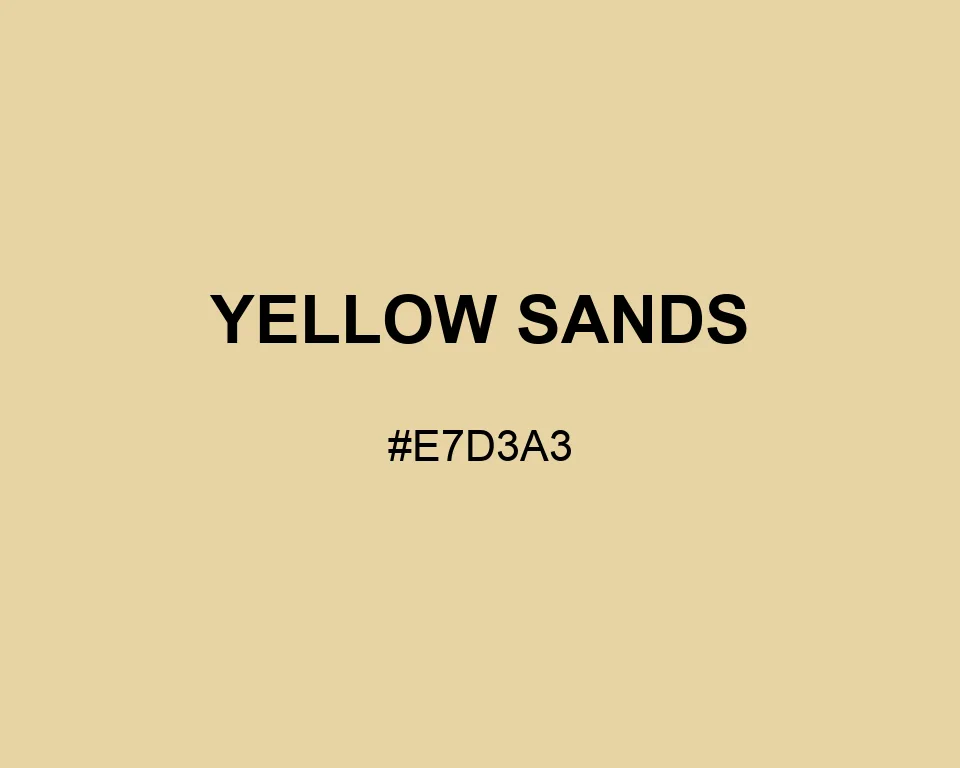
Yellow Sands is muted and mineral. It resembles a dry beach path more than bright dune light. A little gray keeps it grounded.
| Color model | Value | Common use |
|---|---|---|
| HEX | #E7D3A3 | Web and interface color |
| RGB | rgb(231, 211, 163) | Digital screens |
| HSL | hsl(42, 59%, 77%) | Hue-based adjustments |
| HSV | hsv(42, 29%, 91%) | Color pickers |
| CMYK | 0%, 9%, 29%, 9% | Print reference |
#e7d3a3
#0047ab
#91acd1
#1a2c45
#e7d3a3
#bab86c
#d5d19f
#4b4a30
#e7d3a3
#36454f
#9a9f9d
#fff8e7
#e7d3a3
#e35336
#dfa18a
#66372d
Yellow Sands sits comfortably behind contour lines or route labels because it reads as terrain without demanding attention. Its gray cast also helps white details remain visible.
Cobalt blue recalls sea beside sand. Olive green turns the same base toward scrubland. Charcoal is the safest choice for compact map text.
The RGB sequence for #E7D3A3 is 231, 211, and 163. Its lower red ceiling and wider final drop create the muted yellow-tan finish. The result is warm but not golden.

#e7d3a3
#e9d7ac
#ecdcb5
#eee0bf
#f1e5c8
#f3e9d1
#f5edda
#f8f2e3
#faf6ed
#fdfbf6
#ffffff
#e7d3a3
#d0be93
#b9a982
#a29472
#8b7f62
#746a52
#5c5441
#453f31
#2e2a21
#171510
#e7d3a3
#44e7b7
#b744e7
#96896a
#bdad86
#e7d3a3
#ebdbb4
#efe2c3
#e76644
#e7d3a3
#c5e744
#e7d3a3
#4474e7